Garage door stuck due to frost?
In Luxembourg, winter temperatures regularly drop to -10 °C, sometimes -15 °C in the Ardennes. The bottom seal sticks to the threshold, the tracks freeze over, condensation freezes in the hinges. The motor pushes against it and switches to safety mode. Do not force it - thawing is quick if you know what to do.
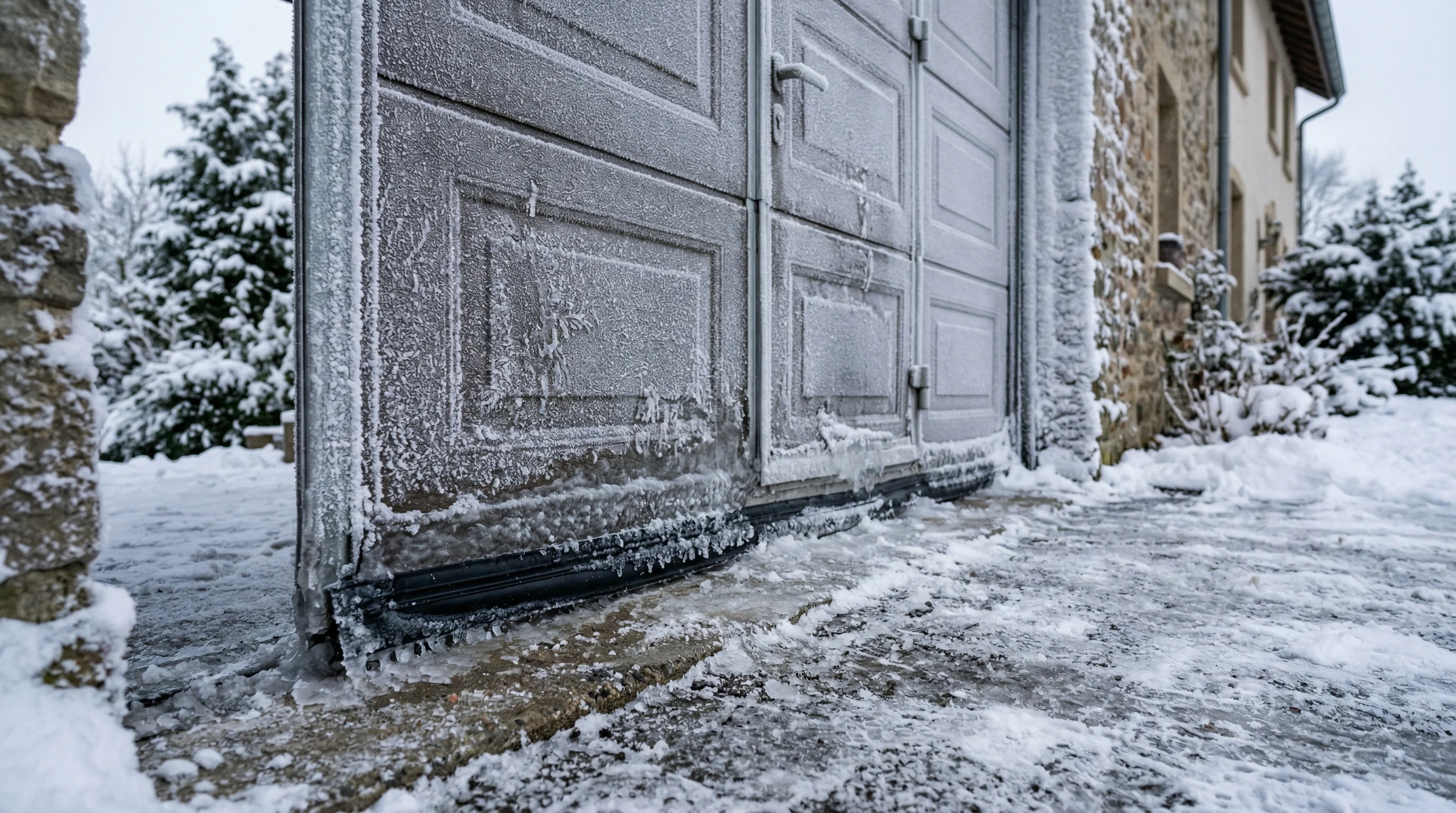
Most winter blockages can be resolved without a technician if you know what to do.
Why your door is stuck due to frost
3 distinct freezing mechanisms. Each has its immediate solution.
Bottom seal stuck to the threshold
Rainwater or meltwater seeps between the rubber seal and the concrete threshold, then freezes overnight. The seal sticks to the ground like a frozen suction cup.
- Door resists at the bottom but not at the top
- Peeling sound when pulling slightly
- EPDM seal visibly stuck to the ground
- Overnight temperature < 0 °C
Frozen tracks and rollers
Condensation freezes inside the side tracks. The rollers slide on a layer of ice and jam. The motor detects the resistance and switches to safety mode.
- Visible frost in the tracks (shiny)
- Door rises 10 cm then jams
- Motor buzzes and stops
- Unheated garage with temperature fluctuations
Frozen condensation in the hinges
The hinges between panels accumulate condensation that freezes. The panels no longer pivot freely - the door jams while going up.
- Progressive resistance while opening
- Audible ice cracking
- Door jams mid-way
- Problem only in the morning (overnight frost)
3 immediate solutions
Most winter blockages can be resolved quickly without a technician. Here are the 3 steps in order.
Free the seal with lukewarm water
Pour lukewarm water (not boiling - it cools too quickly and refreezes) along the bottom seal across its entire width. Wait 1 minute then try to open gently. Do not pull sharply - you will tear the seal off.
Defrost the tracks with a hair dryer
Run a hair dryer at 20 cm distance along each side track, from bottom to top, for 2 to 3 minutes per side. The ice melts, the rollers regain their travel. Wipe the meltwater with a cloth.
Prevention: silicone spray before winter
Spray silicone spray on the bottom seal, inside the tracks and on the hinges before the first frost night. The silicone creates a water-repellent film that prevents water from freezing on contact. Reapply monthly during winter.
Winter intervention
If the frost has caused damage (torn seal, motor burnt out from forcing, track deformed by ice), a technician will intervene.
Phone diagnosis
The technician walks you through the 3 DIY solutions above. If that is not enough, the visit is scheduled.
Travel
Technician equipped with industrial de-icer, replacement seals, professional silicone spray.
Unblocking + repair
Full thaw, torn seal replacement, motor reset, anti-frost treatment application.
Preventive treatment
Application of professional silicone spray on all frost-prone points: seal, tracks, hinges, threshold. Protection for 2-3 months.
Frost repair prices
Most frost blockages can be resolved without a technician (free). Intervention is only necessary if the frost has caused damage.
Often solved free of charge with our phone advice. The maintenance contract (on free quote) includes pre-winter treatment.
Frozen door? Lukewarm water + hair dryer.
If that is not enough: call-out Monday to Friday (8am-12pm / 1pm-5pm) on +352 691 545 407, fast response subject to availability.
“A truly committed company that really took to heart finding a solution for my garage door problem. The staff showed great professionalism and genuine dedication. They were the only ones who really tried to help me. I can only recommend this company without hesitation.”
Frequently asked questions
Answers to our customers' most common questions.
Frost can also cause
Door frozen? Simple solution.
Lukewarm water + hair dryer = free and immediate. If mechanical damage: call-out Monday to Friday (8am-12pm / 1pm-5pm), fast response subject to availability.
Winter frost intervention areas