Garage door that makes noise?
Metallic squeaking, banging on closing, motor vibration - an abnormal noise is always a sign of a component under stress. Identifying the cause now prevents a costly breakdown later. Phone diagnosis is free.
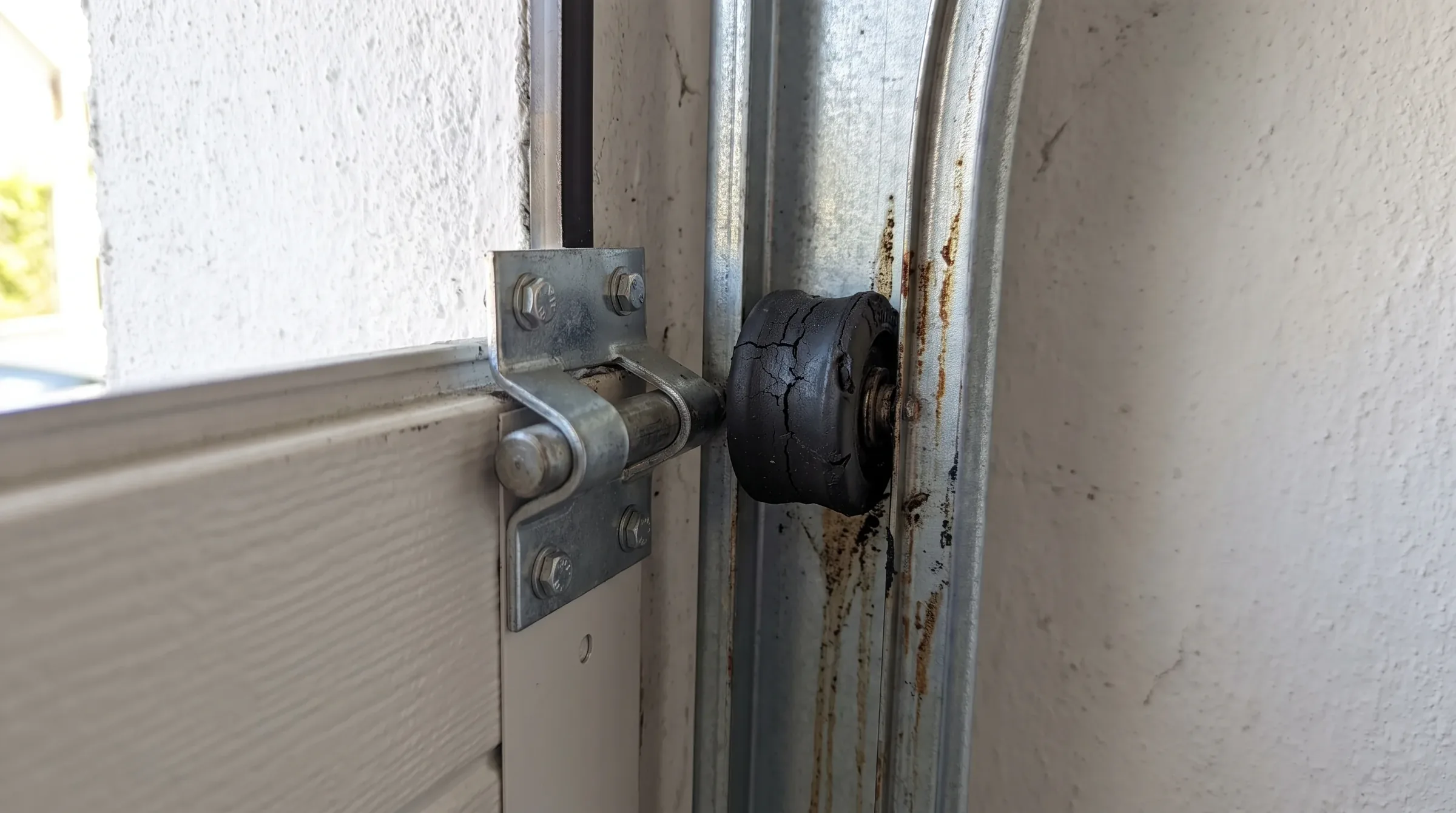
A breakdown is often preceded by abnormal noises for weeks: that is the time to act.
Where does the noise come from?
The type of noise identifies the affected component. Listen carefully and compare with these 4 scenarios.
Continuous metallic squeaking
The rollers or hinges lack lubrication. Metal rubs against metal in the tracks or between panels. Most common cause and easiest to fix.
- Noise present throughout the full travel (up and down)
- Gets worse in cold or dry weather
- Temporarily disappears after amateur lubrication
- Progressive - worsens week after week
Sharp bang at a specific point
A broken roller, misaligned track or twisted hinge blocks the panel at a specific point. The panel forces through and bangs past the obstacle.
- Noise always at the same point of travel
- Palpable vibration when passing
- The door hesitates or slows down before forcing through
- Possible visible deviation of the panel
Motor vibration or humming
The motor is working harder than expected: fatigued spring (the door is heavier), worn gear, or loose motor mounting transmitting vibrations to the ceiling.
- Noise comes from the ceiling / motor, not the tracks
- Vibration noticeable in rooms above
- Motor takes longer to open
- Noise appeared progressively over months
Violent banging on opening/closing
Torsion spring at end of life: it poorly compensates the panel weight, causing a brutal jolt at the start or end of travel. Precursor to an imminent break.
- Banging at the very start of opening (the worst moment)
- The door jolts when going up the first centimetres
- Visible: the spring has a shinier area (wear)
- The noise gets worse day after day
A noise is never harmless
Every noise signals a component under stress. Preventive maintenance costs far less than a repair after a breakdown - both are priced with a free quote.
Identify the type of noise
Continuous squeaking = lubrication. Localised banging = roller or track. Motor vibration = spring or mounting. Violent banging = spring at end of life. Note at which point of the travel the noise occurs - this speeds up diagnosis.
Stop using if violent banging
A sharp, loud bang at the start of travel signals a spring that is about to break. Each additional cycle brings the break closer. Stop using the door and call.
Call for a diagnosis
Our technician often identifies the cause during the call. If a visit is needed, the on-site diagnosis is included in the repair price.
Diagnosis and noise repair
Most noises are resolved on site, usually in a short visit.
Phone diagnosis
Description of the noise, point of travel, how long it has been present. The cause is often identified at this stage.
Travel
Technician equipped with silicone spray, rollers, hinges and tensioning tools.
On-site diagnosis
Listening during operation, visual inspection of tracks/rollers/spring, balancing test.
Repair
Complete lubrication, replacement of worn rollers, tightening fixings, or spring replacement if at end of life.
Diagnosis pricing & noise repair
Noise is often the cheapest symptom to treat - if you act before the breakdown.
Regular preventive maintenance, priced with a free quote, avoids many heavier repairs. The maths is simple.
A noise that gets worse = a breakdown approaching.
Preventive diagnosis now or emergency repair later. The choice is simple.
“Call for a maintenance and finish with a replacement of the electrical motor which was the root cause of our noisy system. Efficient and responsive - well done.”
Frequently asked questions
Answers to our customers' most common questions.
A noise often announces a more serious problem
Your door squeaks? Free diagnosis.
A free phone diagnosis often identifies the cause. Acting early always costs less than a repair after a breakdown.
Noise diagnosis service areas