
Thermal insulation
of your garage door
A poorly insulated garage door can noticeably increase heating costs in an attached garage. This guide details the 6 technical criteria that determine the energy performance of a garage door: U-value, panel thickness, perimeter seals, thermal break, PRIMe House grant eligibility, and real energy impact. The data is based on Hörmann products installed by Fermelux in Luxembourg.
Insulation by door type
Each garage door type offers a radically different level of thermal insulation. Sectional doors with thick panels clearly lead, while uninsulated up-and-over doors and roller doors perform worst. Understanding these differences is essential to choose the right door for your situation: heated attached garage, unheated detached garage, or underground car park.
| Type | Insulation (U) | Panel thickness | Ideal for |
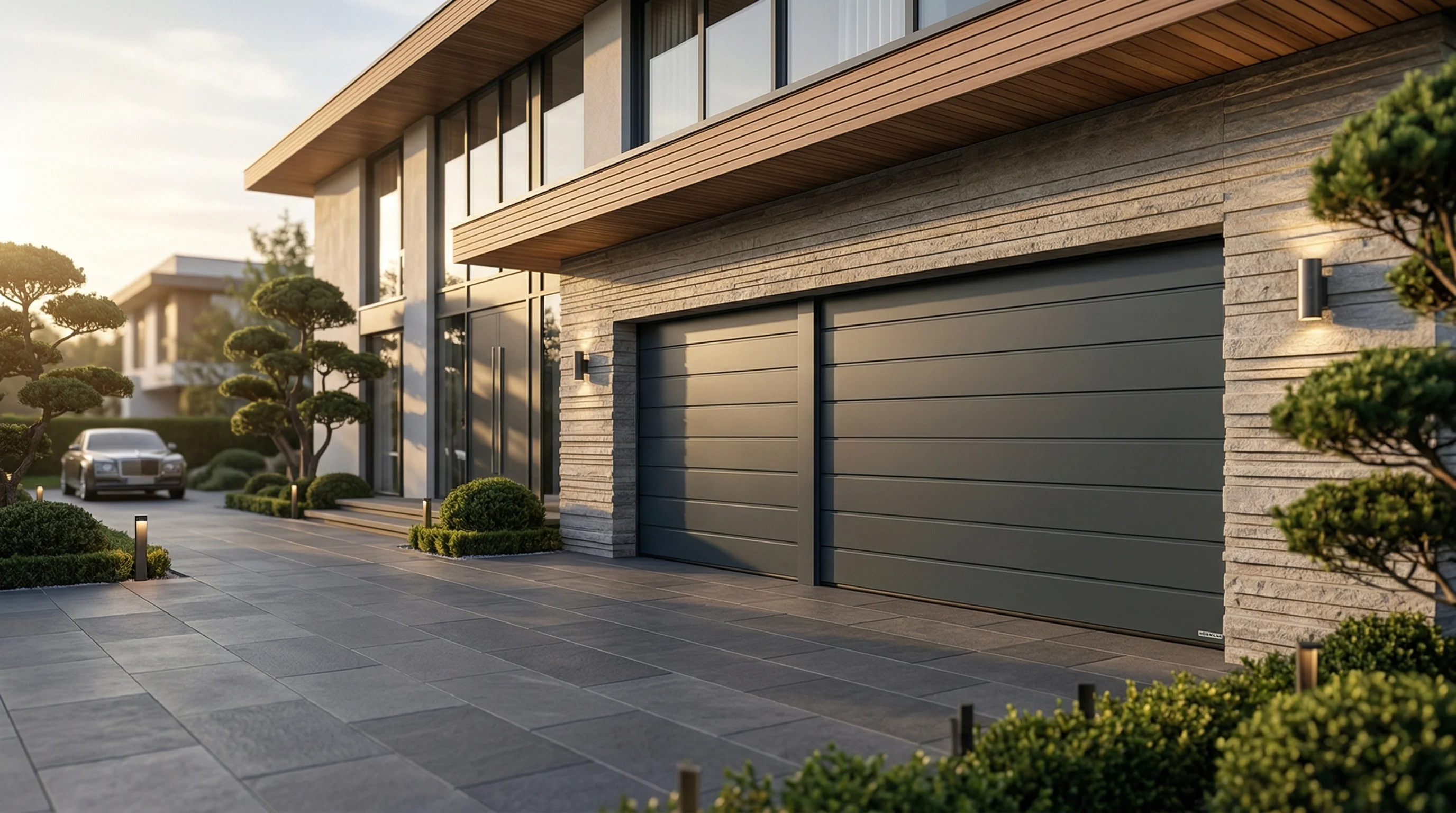 Sectional 67 mm Thermo | Maximum insulation (U = 1.0 W/m²K installed) | Horizontal ceiling rails | Heated attached garage, high-performance home, cold Ardennes climate |
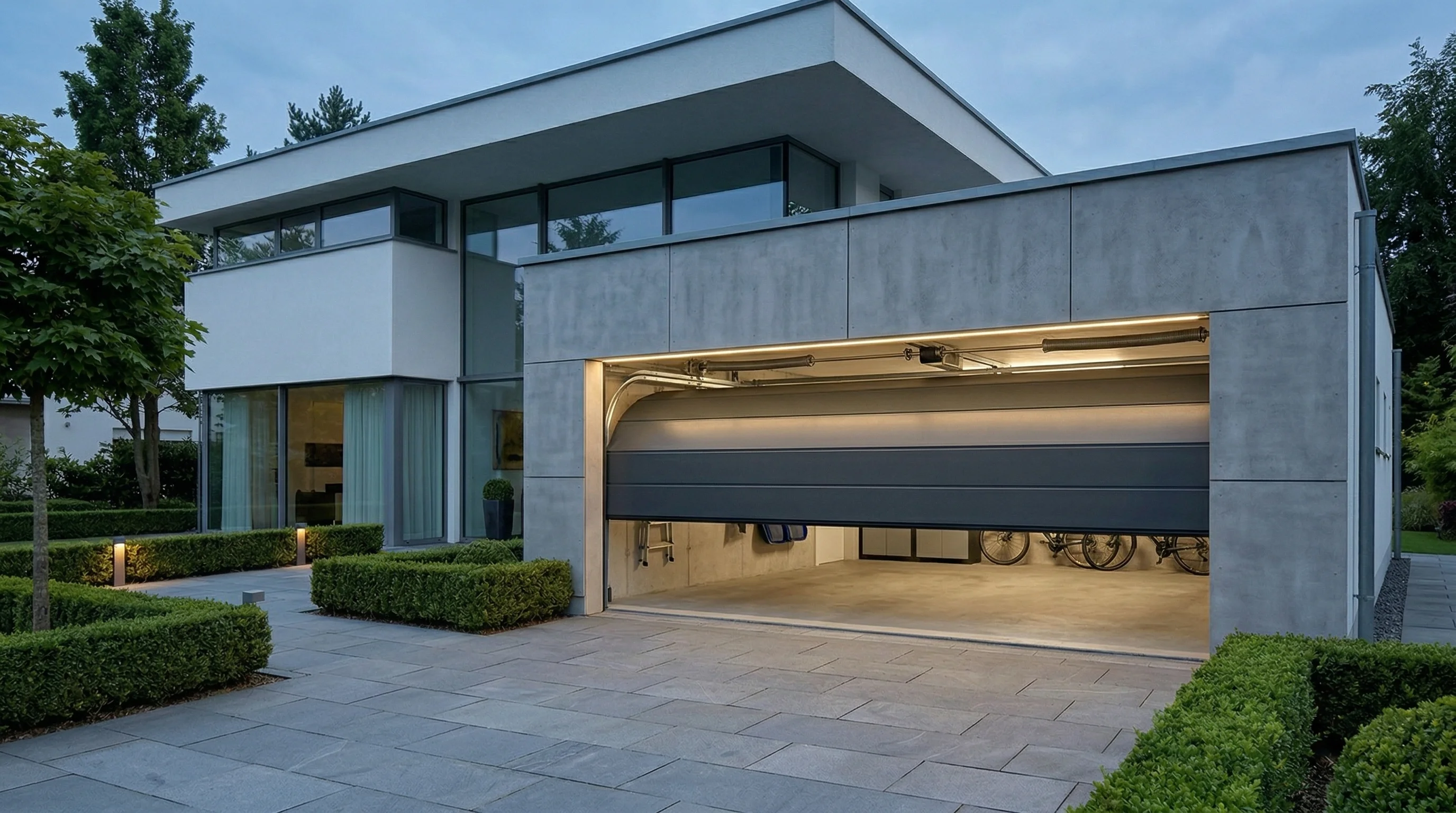 Sectional 42 mm | Excellent insulation/price ratio (U = 1.3 W/m²K installed) | Horizontal ceiling rails | Standard attached garage, 90% of Luxembourg homes |
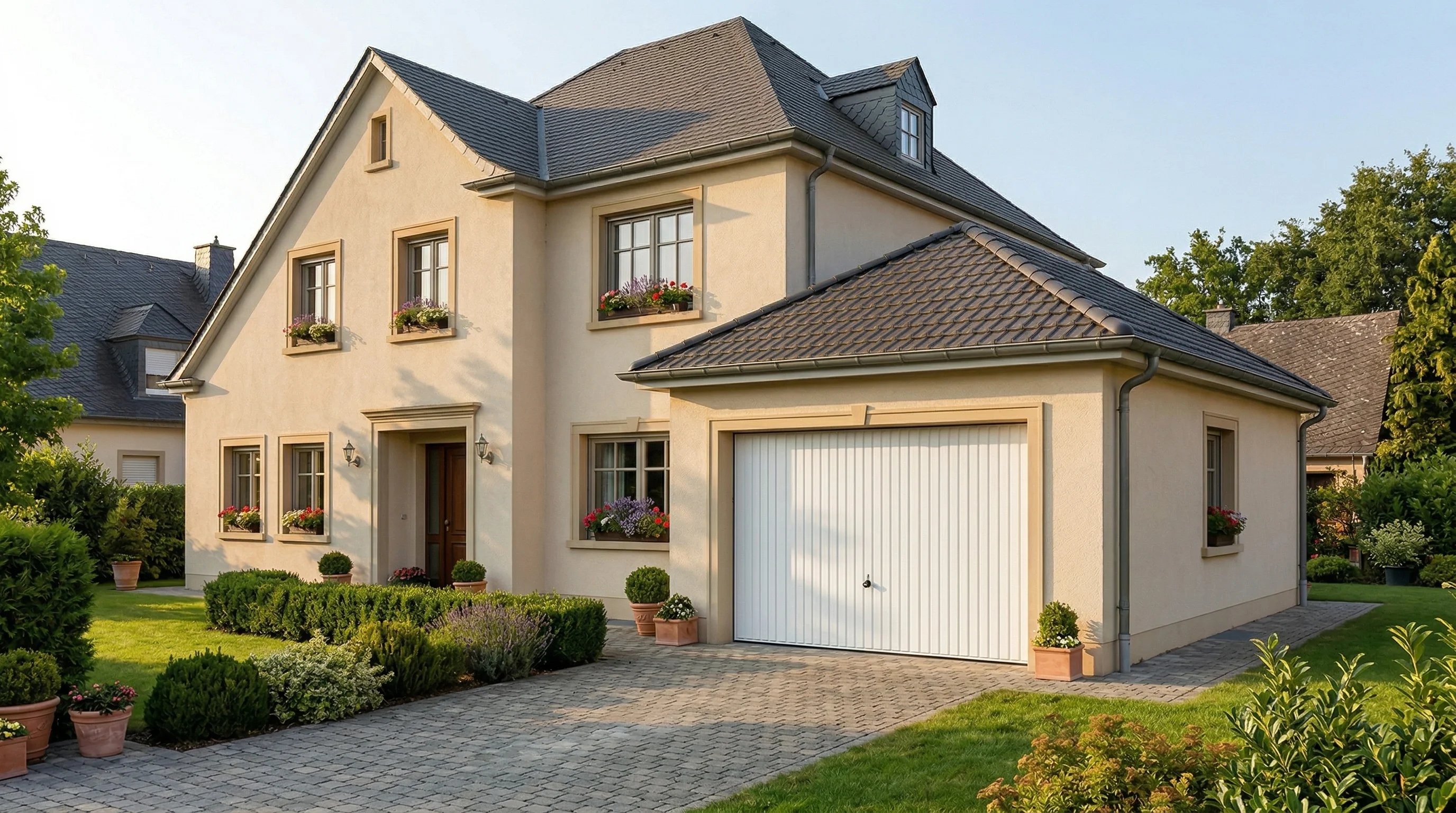 Up-and-over insulated | Moderate insulation (U = 1.9 W/m²K with Hörmatherm) | External swing ~1 m | Detached garage, renovation on a tight budget |
| Up-and-over single-skin | Minimum budget (U = 6.5 W/m²K) | External swing ~1 m | Unheated detached garage, minimal budget |
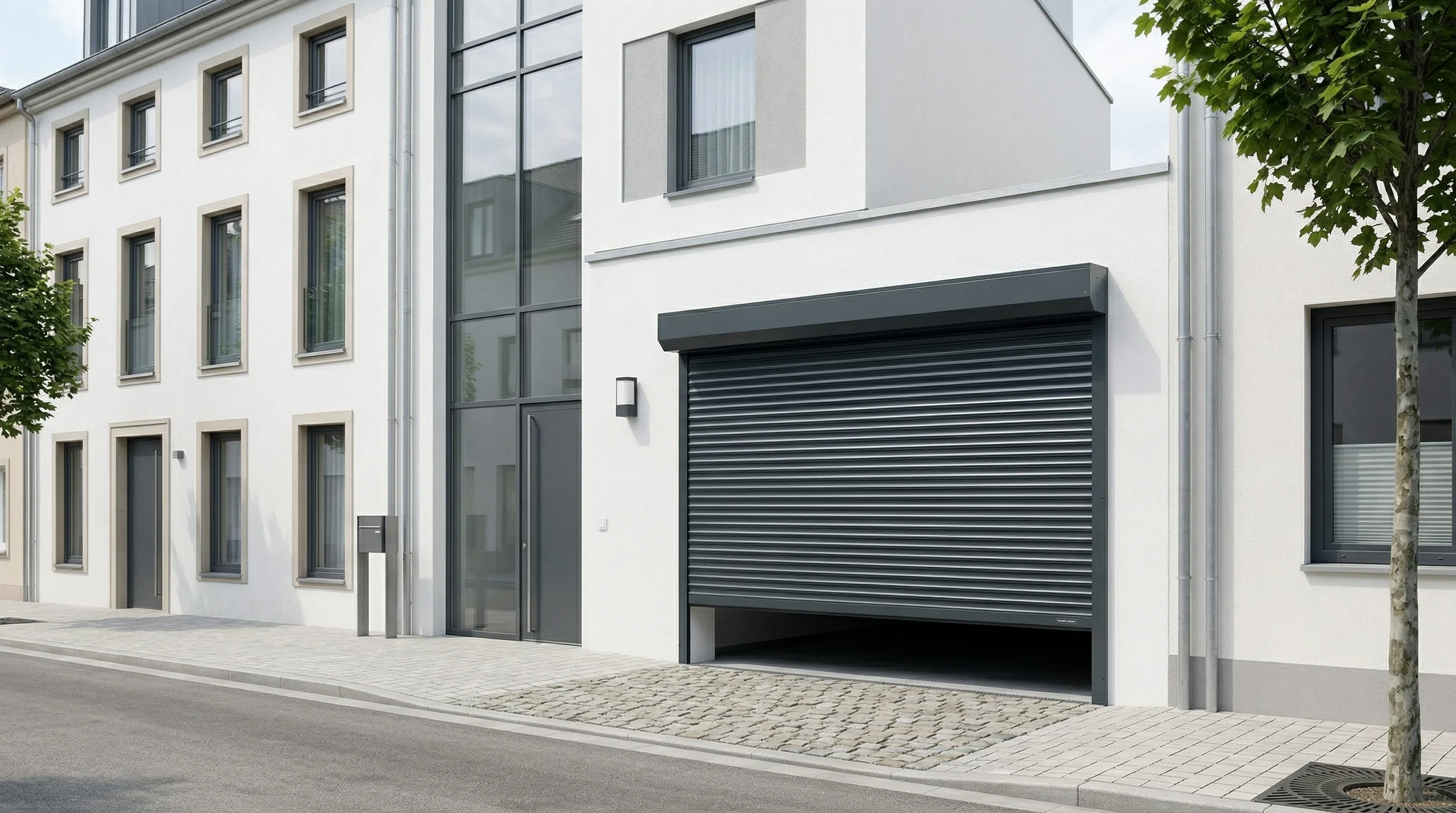 Roller door RollMatic | Zero footprint (U not published) | Box 290-335 mm at lintel only | Underground parking, unheated garage, obstructed ceiling |
Sectional 67 mm Thermo
Maximum insulation (U = 1.0 W/m²K installed)
Sectional 42 mm
Excellent insulation/price ratio (U = 1.3 W/m²K installed)
Up-and-over insulated
Moderate insulation (U = 1.9 W/m²K with Hörmatherm)
Up-and-over single-skin
Minimum budget (U = 6.5 W/m²K)
Roller door RollMatic
Zero footprint (U not published)
« Garage door insulation is not a technical detail - it is a real energy issue. A poorly insulated attached garage cools adjacent rooms by 3 to 5 °C, which increases your heating bill by 5 to 10%. The door accounts for 15 to 25% of garage heat loss. Choosing the right U-value means investing in your annual savings. »
The 6 criteria of thermal insulation
These 6 criteria determine the real energy performance of a garage door. We systematically check them during the free on-site visit to recommend the right solution for your Luxembourg context.
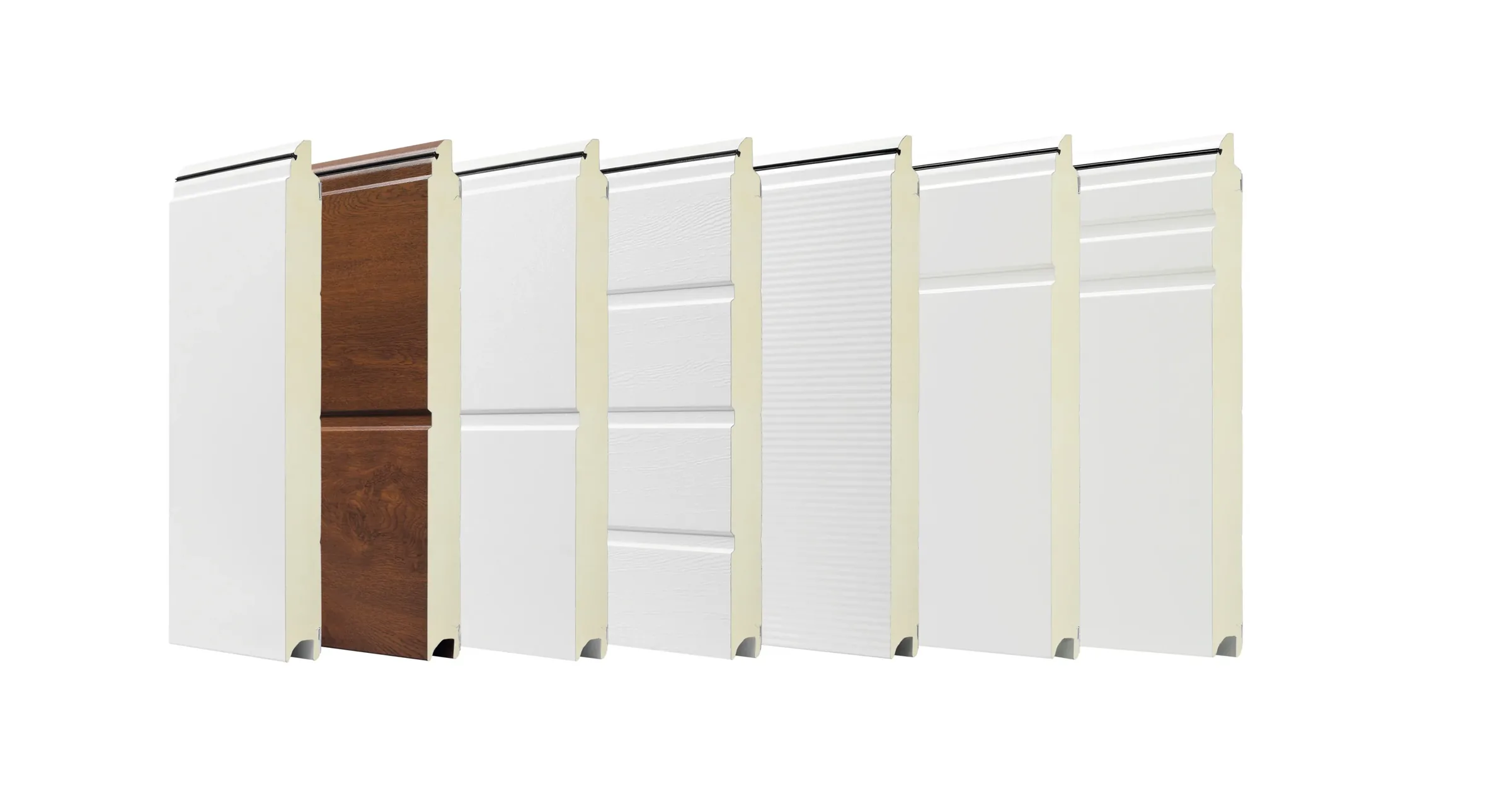
U-value (W/m²K)
The U-value measures heat loss: the lower it is, the better the insulation. For an attached garage, aim for at least the level of an LPU 42 sectional door (U = 1.3 W/m²K installed). For a heated garage, the LPU 67 Thermo goes down to 1.0 W/m²K (0.91 with the optional ThermoFrame). Comparison (installed): LPU 67 Thermo 1.0, LPU 42 1.3, Berry with Hörmatherm insulation 1.9, uninsulated steel Berry 6.5; RollMatic: no published value. It is criterion #1 - it weighs on PRIMe House eligibility and your annual savings.
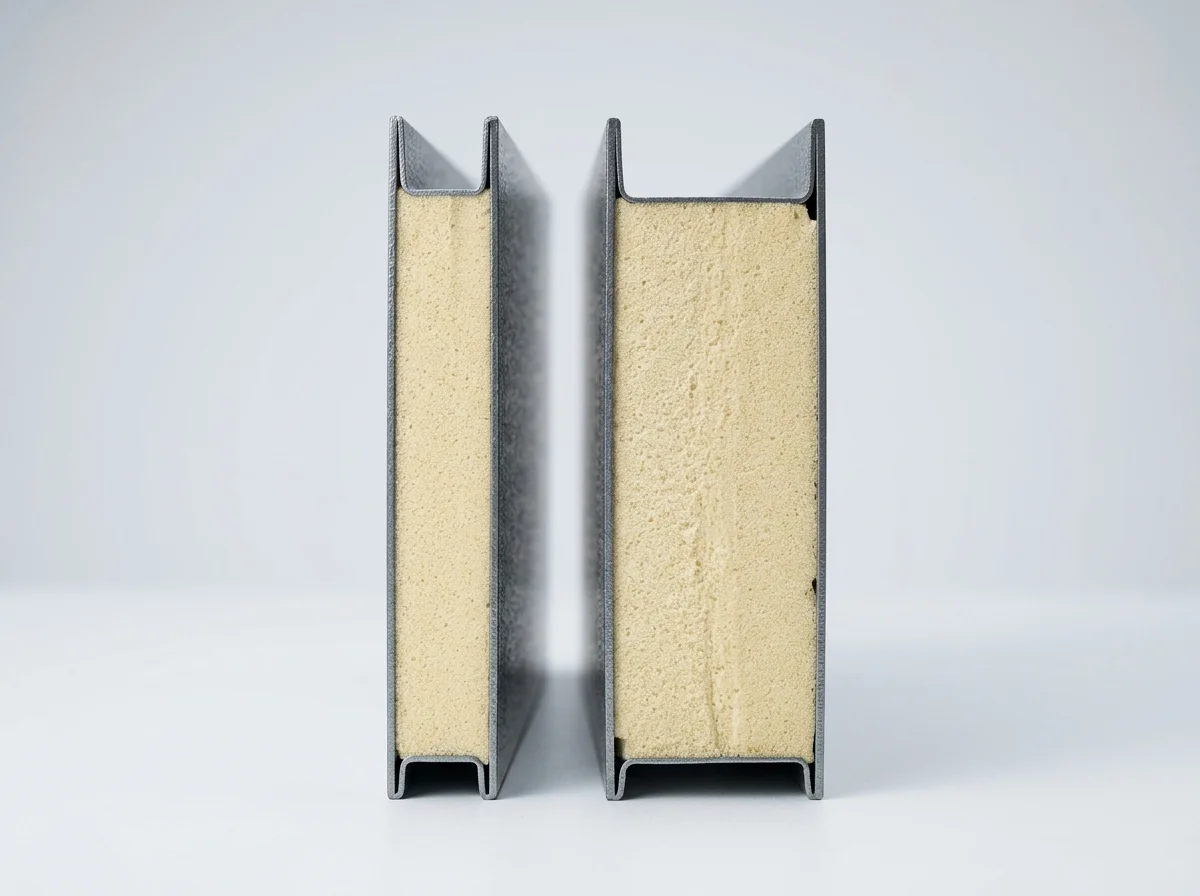
Panel thickness
Panel thickness directly determines thermal resistance. The LPU 67 Thermo has 67 mm double-skin steel panels with PU foam and a thermal break (panel U 0.31 W/m²K, installed door 1.0 W/m²K). The LPU 42 is 42 mm (panel U 0.53, installed door 1.3 W/m²K), covering 90% of residential needs in Luxembourg. The Berry N80 keeps a single-skin steel leaf, to which optional 20 mm insulating panels (U = 2.1) or 25 mm Hörmatherm insulation (U = 1.9) can be added. The RollMatic has double-skin PU aluminium slats - thickness limited by the rolling principle.
Perimeter seals
Perimeter sealing is critical: side seals, top seal and bottom seal on the threshold. Seals in good condition greatly limit air infiltration and losses at the edges. This is especially crucial in Luxembourg, where winters reach -15 °C in the Ardennes. Hörmann LPU sectional doors are sealed all round, and the LPU 67 Thermo also has a double lip seal between the panels. A worn bottom seal is the number-one cause of cold draughts under the door.
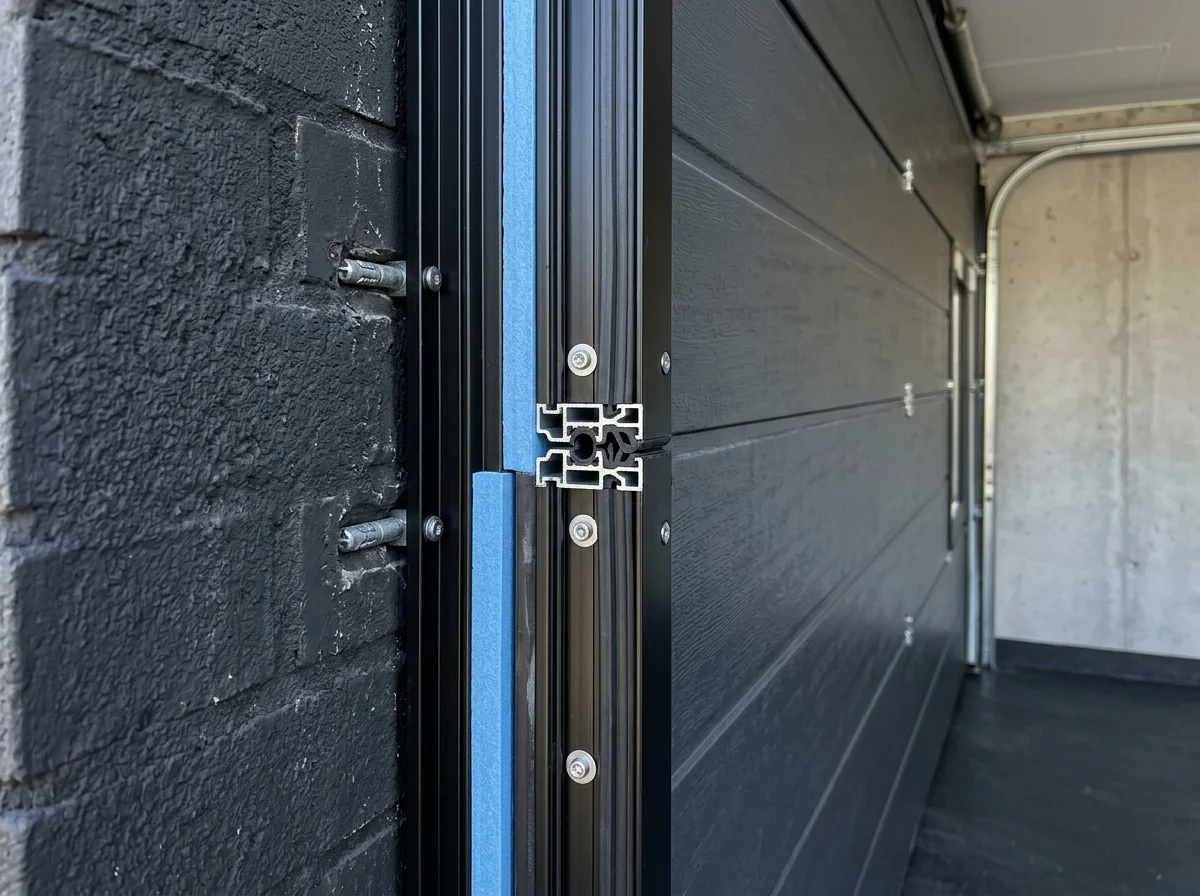
Thermal break
The thermal bridge at the frame is an often-overlooked weak point. Hörmann's optional ThermoFrame is a synthetic profile fitted to the frame: it creates a thermal break between frame and masonry and adds sealing lips. Gain: up to 15% on the installed-door U-value (LPU 42: 1.3 → 1.2 W/m²K; LPU 67 Thermo: 1.0 → 0.91 W/m²K). On the LPU 67 Thermo, the panels themselves are also thermally broken. A key criterion given Luxembourg's ever-stricter energy standards.
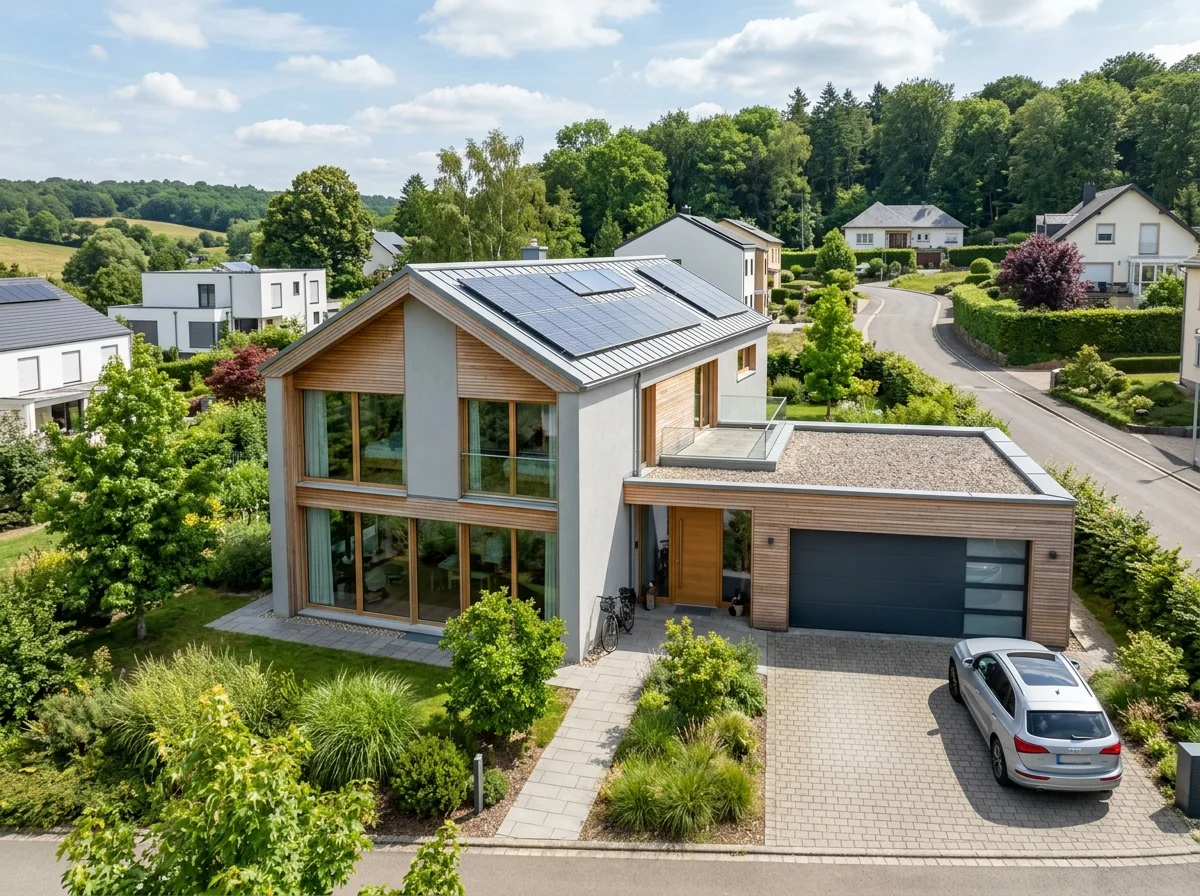
PRIMe House grant eligibility
Luxembourg's PRIMe House energy-renovation grants can partly cover the replacement of a garage door. A heated attached garage within an overall renovation project is eligible. The LPU 67 Thermo (U = 1.0 W/m²K installed, 0.91 with ThermoFrame) is the best-insulated door in Hörmann's residential range, and the ThermoFrame also tackles the frame's thermal bridge. We help our customers put together their PRIMe House application during the free visit.
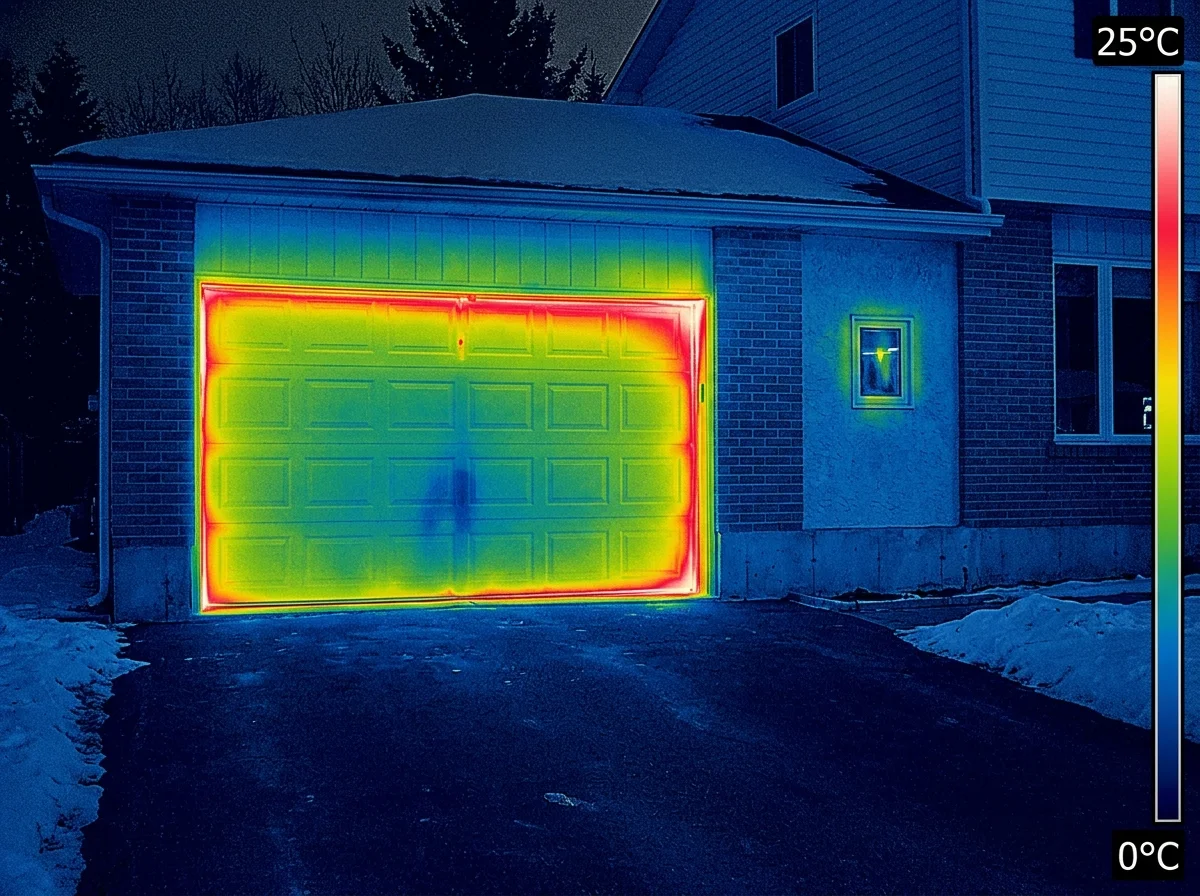
Real energy impact
A poorly insulated attached garage pushes up heating bills. Insulating the door prevents the temperature of adjacent rooms from dropping by 3 to 5 °C. The savings depend on climate and exposure. The garage door accounts for 15 to 25% of total garage losses. In a global energy renovation project, this is an essential item.
LPU 67 Thermo vs LPU 42 vs Berry N80 insulated
Detailed comparison of the 3 most relevant doors for thermal insulation of an attached garage in Luxembourg. The LPU 67 Thermo dominates on all criteria, the LPU 42 offers the best value for money, and the Berry N80 insulated is the entry-level option.
LPU 67 ThermoLPU 42Berry N80 insulated| Criterion | LPU 67 Thermo | LPU 42 | Berry N80 insulated |
| U-value | 1.0 W/m²KExcellent | 1.3 W/m²KGood | 1.9 W/m²K (Hörmatherm)Average |
| Panel thickness | 67 mm double-skin PUExcellent | 42 mm double-skin PUGood | Single-skin steel + 25 mm insulationAverage |
| Seals | Perimeter + double seal between panelsExcellent | PerimeterGood | Depends on equipmentAverage |
| ThermoFrame | OptionalGood | OptionalGood | Not availableAverage |
| PRIMe House | Partially eligibleExcellent | Not eligibleAverage | Not eligibleAverage |
| Annual energy loss | LowExcellent | MediumGood | HighAverage |
Need a thermal assessment ?
Our technicians assess your current door's heat loss for free and recommend the right solution for your Luxembourg context. We support PRIMe House grant applications.
Detailed energy performance
The U-value is the key measure of a garage door's thermal performance. It expresses heat loss in watts per square metre per degree of difference (W/m²K). The lower the U, the better the insulation. The Hörmann LPU 67 Thermo reaches U = 1.0 W/m²K as installed (0.91 W/m²K with the optional ThermoFrame; 0.31 W/m²K for the panel alone) - the best value in Hörmann's residential range. The LPU 42 reaches U = 1.3 W/m²K installed, covering 90% of residential needs. The Berry N80 gets down to U = 1.9 W/m²K at best with the optional Hörmatherm insulation (6.5 W/m²K uninsulated), while Hörmann publishes no U-value for the RollMatic.
In terms of real energy cost, a poorly insulated door in an attached garage weighs noticeably on the heating bill. The LPU 67 Thermo reduces this loss the most, ahead of the LPU 42 and then the insulated Berry N80. The impact varies depending on garage exposure, local climate (the Ardennes drop to -15 °C in winter), and whether the garage is heated.
Hörmann's ThermoFrame is an optional synthetic profile fitted to the frame - the fixed structure into which the door fits. Without it, the metal frame conducts cold directly inside. The ThermoFrame creates a thermal break between frame and masonry and improves the installed-door U-value by up to 15% (LPU 42: 1.3 → 1.2 W/m²K; LPU 67 Thermo: 1.0 → 0.91 W/m²K). It is a moderately priced option (priced in a free quote), quickly recouped in a heated garage.
Perimeter seals ensure weathertightness: side seals, top seal and bottom seal on the threshold; the LPU 67 Thermo adds a double lip seal between the panels. EPDM (ethylene propylene diene monomer) is a synthetic rubber resistant to UV, frost and ozone. Seals in good condition greatly limit air infiltration. In Luxembourg, harsh winters (-15 °C in the Ardennes) speed up seal hardening - an annual inspection is recommended.
Regarding PRIMe House grants, replacing a garage door as part of an overall energy renovation can be partly eligible. The garage must be attached and heated. The LPU 67 Thermo, the best-insulated door in the residential range (U = 1.0 W/m²K installed, 0.91 with ThermoFrame), offers the best chances. The ThermoFrame, which treats the frame's thermal bridge, further improves the installed door's performance. We help our customers prepare the PRIMe House application during the free visit.
The Luxembourg climate context makes garage door insulation increasingly critical. Winters regularly drop to -15 °C in the Ardennes, and energy standards (Lenoz, passive house) are tightening. A well-insulated attached garage maintains a temperature 3 to 5 °C higher without additional heating, which correspondingly reduces the heating demand of adjacent rooms in the house.
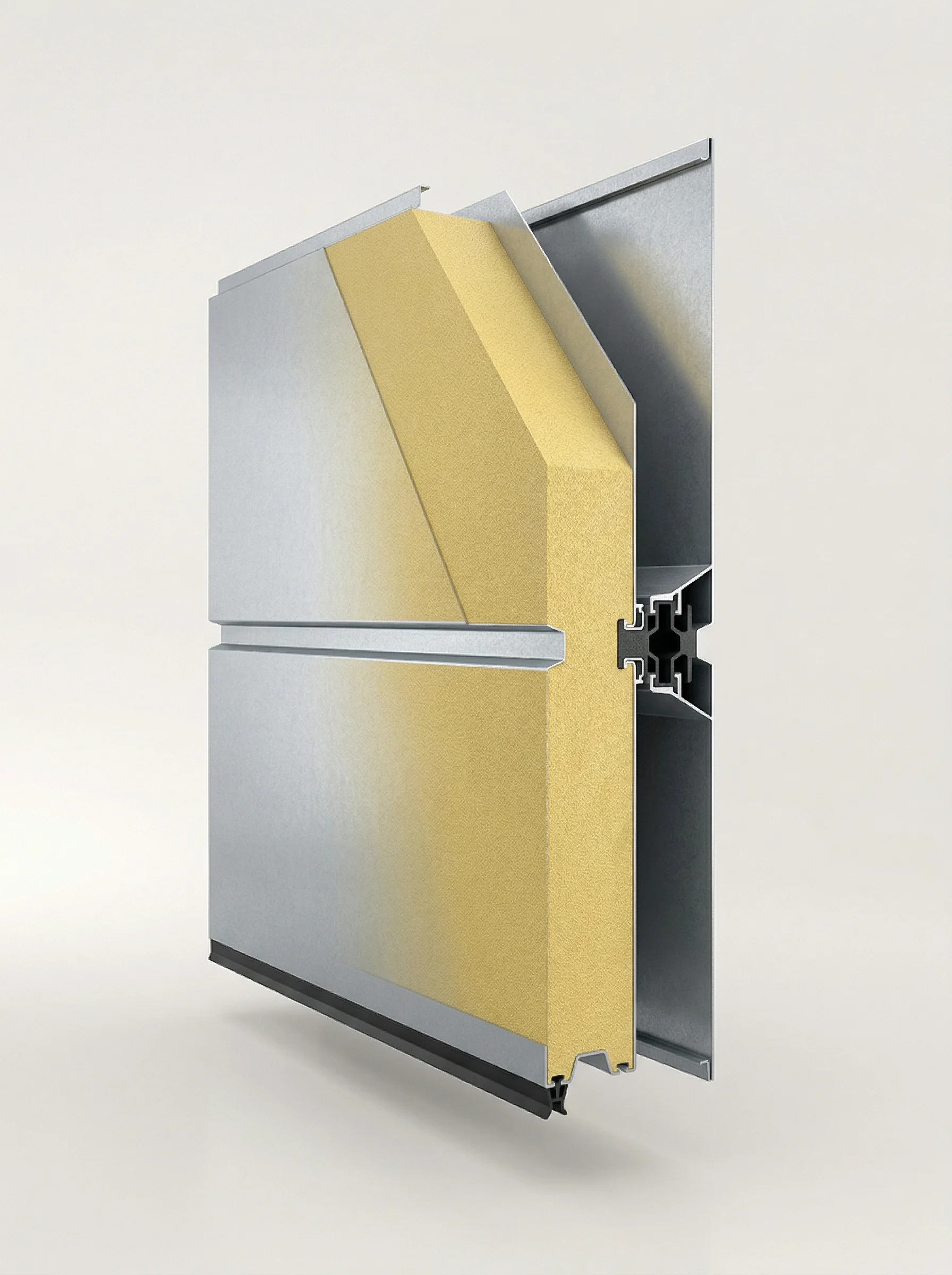
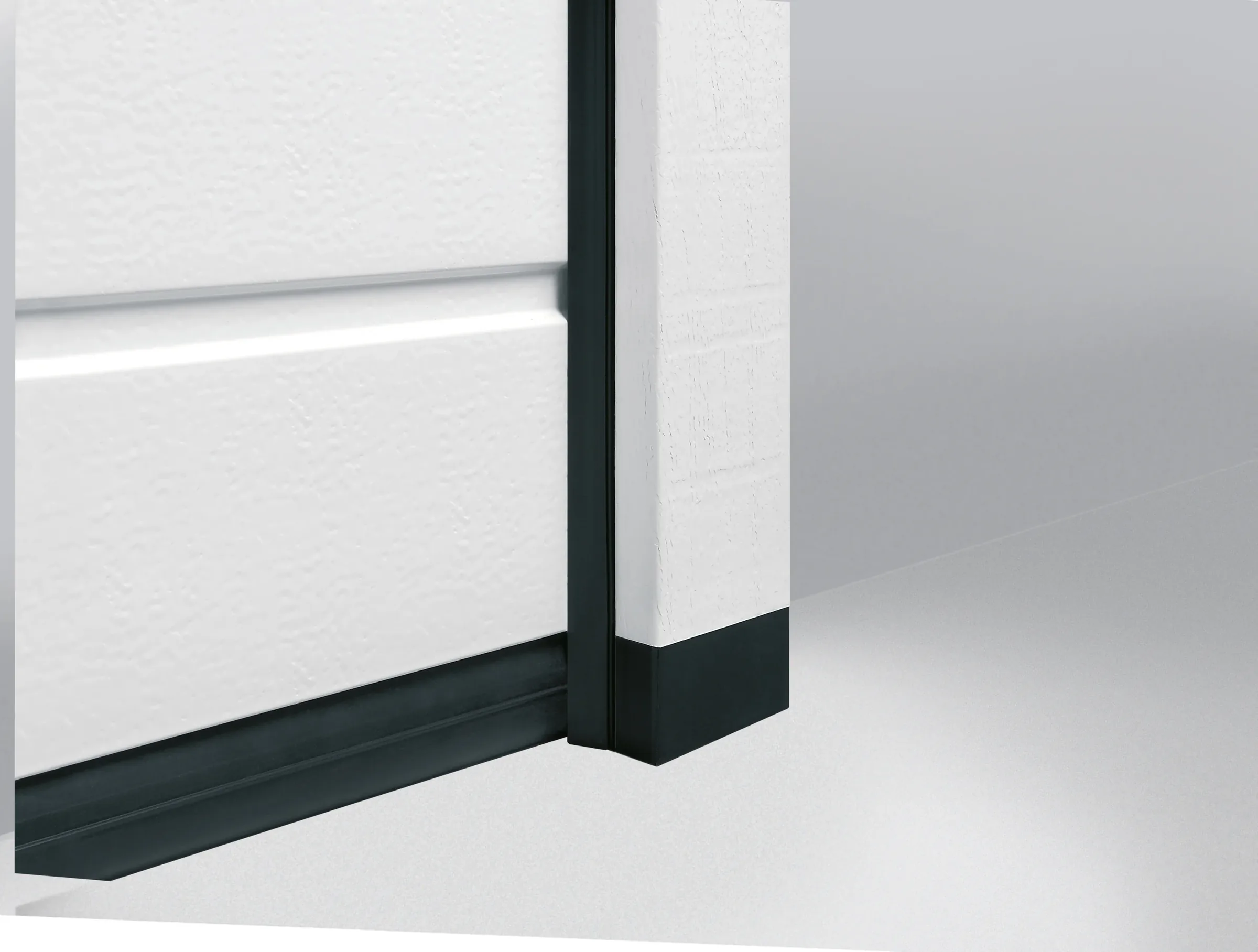
Perimeter seals: side seals, top seal and bottom seal on the threshold. Careful sealing greatly limits air infiltration - a crucial gain in Luxembourg winters at -15 °C.
« A poorly insulated attached garage is like a permanently open window in your living room. The garage door accounts for 15 to 25% of garage losses, and the garage itself directly affects the temperature of adjacent rooms. Insulating the door means investing in the comfort of the whole house - and noticeably reducing your heating bill. »
Budget & range levels
3 range levels for garage door thermal insulation in Luxembourg. From the economical RenoMatic replacement to the premium LPU 67 Thermo, the best-insulated door in the residential range, each level suits a different context. Installation, removal, and motorisation included.
RenoMatic 42 mm
Hörmann RenoMatic sectional door, 42 mm double-skin panels (Hörmann publishes no U-value for this range), ProMatic operator included, 7 colours and 3 DecoColor finishes, perimeter seals. Ideal for replacements on recent estates or detached garages. The best entry-level insulation/price ratio.
- 42 mm double-skin PU panel
- U not published by Hörmann
- ProMatic motorisation included
- 7 colours + 3 DecoColor finishes
- Perimeter seals
- 10-year warranty
LPU 42 ThermoFrame
Double-skin LPU 42, ThermoFrame thermal break on the frame, perimeter seals, SupraMatic E4 BiSecur operator. U = 1.2 W/m²K installed with ThermoFrame. The standard for an attached garage - 90% of Luxembourg homes find what they need here.
- 42 mm double-skin PU panel
- ThermoFrame frame included
- Perimeter seals
- SupraMatic E4 BiSecur motorisation
- U = 1.2 W/m²K with ThermoFrame
- 10-year warranty
LPU 67 Thermo
Double-skin 67 mm LPU 67 Thermo, U = 0.91 W/m²K installed with the ThermoFrame included in this offer (1.0 without), Silkgrain surface or 3 Decograin finishes, RC2 burglar resistance as standard, SupraMatic P4 operator, integrated LED lighting. The best insulation in Hörmann's residential range. Partially eligible for PRIMe House.
- 67 mm double-skin PU panel
- U = 0.91 W/m²K with ThermoFrame
- ThermoFrame included
- Double lip seal between panels
- SupraMatic P4 motorisation
- Integrated LED lighting
Prices depend on dimensions, colour, and options. RenoMatic, LPU 42 or LPU 67 Thermo: price on free quote. Free on-site visit in Luxembourg, free and fast quote.
Get my precise quote9 insulation and sealing problems
The 9 most common problems related to garage door insulation and sealing, with probable cause, solution, and intervention level. Problems marked « Pro » require a technician, « DIY » ones can be resolved by the homeowner.
| Problem | Probable cause | Solution | Level |
| Cold draught under the door | Worn, deformed, or cracked bottom seal. Threshold not sealed or debris blocking the seal. | Replace the rubber bottom seal (standard part). Clean the threshold and check that no debris is blocking the seal. If the threshold itself is damaged: Pro intervention. | DIY possible |
| Condensation on the door | Single-skin panel without insulation, significant temperature difference between inside and outside, insufficient garage ventilation. | Improve garage ventilation (ventilation grilles). If condensation persists: consider replacing with an insulated double-skin door. Pro diagnosis recommended. | Pro advised |
| Door icing in winter | Thermal bridge at the door frame, absence of thermal break, large temperature difference with the outside (Ardennes -15 °C). | Check the condition of frame seals (DIY). If the frame itself conducts cold: install the ThermoFrame thermal-break profile (Pro, free quote). | Pro advised |
| Unstable garage temperature | Insufficient panel insulation (single-skin or thickness < 42 mm), failing perimeter seals, non-sealed door. | Upgrade from a 42 mm panel to a 67 mm panel for a significant gain in heated attached garages. Full thermal diagnosis recommended (infrared camera). | Pro advised |
| Wind noise / whistling | Deformed, hardened, or missing side EPDM seals. Air infiltration at the door sides. | Replace side EPDM seals (standard part). They clip into the guide profiles. Replacement takes 15-20 minutes. If whistling persists: check door alignment. | DIY possible |
| Water running under the door | Degraded, cracked, or reversed floor threshold slope. Missing or ineffective bottom seal. | Clean the threshold and clear water drains (DIY). If the threshold is cracked or the slope is reversed: renew the concrete threshold or install an anti-infiltration threshold (Pro). | DIY possible |
| Rust on steel panel | Chipped or scratched paint, standing moisture, exposure to road salt (Luxembourg winter). | Lightly sand the affected area and repaint with matching RAL anti-corrosion paint (DIY, Hörmann touch-up kit). If corrosion is deep (holes in the panel): replace the panel (Pro). | DIY possible |
| Abnormal energy bill | Heat loss through the uninsulated garage door. The door accounts for 15-25% of garage losses, which affects adjacent rooms in the house. | Full thermal diagnosis recommended: infrared camera to locate thermal bridges, air infiltration analysis. Door replacement or added insulation depending on results. | Pro advised |
| Mould in the garage | Insufficient ventilation combined with condensation on cold walls. Significant temperature difference between garage interior and outside in winter. | Improve ventilation naturally (high and low ventilation grilles) or mechanically (single-flow VMC). Check door seal to limit incoming moisture (DIY). If the problem persists: install a VMC system (Pro). | DIY possible |
If in doubt about the source of heat loss, call us at +352 35 53 78. Free diagnosis by phone before intervention.
Insulation maintenance routine
Garage door insulation is maintained through regular care of seals, threshold, and frame. A well-maintained door retains its thermal performance for 15 to 20 years. EPDM seals in particular should be inspected annually - in Luxembourg, harsh winters (-15 °C Ardennes) accelerate their hardening.
Bottom seal & threshold cleaning
Clean the rubber bottom seal and door threshold. Remove debris, leaves, and gravel blocking the seal. A damp cloth is sufficient. Check that water drains correctly from the threshold.
EPDM perimeter seal inspection
Inspect side and bottom EPDM seals: check for cracks, hardening, flattening, or tearing. EPDM seals last 10-15 years under normal conditions, less in harsh climates. Replace if damaged.
ThermoFrame check
Check the integrity of the ThermoFrame (thermal break). Visually inspect for cracks, corrosion, or deformation. ThermoFrame is critical for thermal performance - a degraded frame cancels the benefit of a well-insulated panel.
Full thermal inspection
Full thermal inspection: infrared camera if possible to locate thermal bridges. Replace worn or hardened seals. Clean panels with neutral soap (no abrasive products). Check threshold sealing and water drainage.
Recommended products
- Hörmann touch-up paint kit (matching RAL)
- EPDM replacement seals (side and bottom)
- Silicone spray for seal maintenance
- Diluted neutral soap (panel cleaning)
- Soft microfibre cloth
Absolutely avoid
- Pressure washer (damages seals and paint)
- Solvents, white spirit, acetone (destroy EPDM seals)
- Grease on rubber seals (degrades them)
- Abrasive products or wire brushes (scratch the coating)
- Ignoring a cracked seal (infiltrations double heat loss)
What you can do yourself
Maintaining garage door insulation involves simple and safe actions, but also interventions that absolutely require a professional. Here is the clear split between what you can do and what requires a certified technician.
You can do this
- Replace the bottom sealThe bottom seal slides into a groove on the lower panel. Standard part, replacement in 10 minutes with no special tools. Cut power to the motor first.
- Clean EPDM sealsDamp cloth and neutral soap on side and bottom seals. Dry thoroughly. A yearly spray of silicone extends their lifespan.
- Check the thresholdInspect the floor threshold: cracks, slope, debris accumulation. Clear water drains. A clean threshold ensures the bottom seal's sealing.
- Apply touch-up paintHörmann touch-up kit matching RAL. Lightly sand the area, apply anti-corrosion paint in 2 coats. Prevents rust from spreading.
- Improve ventilationInstall high and low ventilation grilles in the garage. Reduces condensation and mould. Simple and effective solution, especially in winter.
Never without a pro
- Replace insulated panelsRequires complete door removal and handling of heavy panels (20-40 kg each). Risk of falling and spring tension imbalance.
- Modify frame insulationThe frame is structurally linked to the masonry. Any modification affects the stability and sealing of the installation. Only a pro can replace a standard frame with a ThermoFrame.
- Alter thermal breaksThermal breaks are structural elements integrated into the panel and frame. Modifying them compromises overall insulation and may invalidate the warranty.
- Diagnose thermal bridges without equipmentLocating thermal bridges requires an infrared camera and professional analysis. Amateur diagnosis often misses critical points (frame, threshold, joints).
Warning - insulated panels and springs
The panels of a sectional door each weigh 20 to 40 kg and are held by high-tension springs. Never attempt to dismantle an insulated panel without neutralising the springs. Replacing an insulated panel requires complete door removal and technical expertise. If you suspect a structural insulation problem, call a certified technician.
Frequently asked questions
Answers to our customers' most common questions.
Complementary guides
Ready to improve your garage insulation ?
Our Fermelux experts travel for free throughout the Grand Duchy to assess your current door's heat loss and propose the right insulated solution. Free, fast detailed quote, PRIMe House support included.